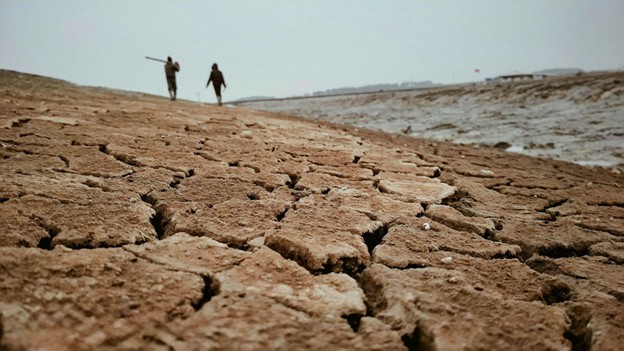
Securiport has increasingly found itself engaged in conversations that, a decade ago, would have seemed peripheral to border security. Climate patterns, seasonal unpredictability, rising sea levels, and prolonged drought were all once framed as environmental or humanitarian concerns.
Today, they are operational realities shaping migration flows and challenging the physical and digital infrastructure of international borders. Across parts of Africa and other climate-vulnerable regions, shifts in weather patterns are quietly altering long-established migration routes.
Agricultural livelihoods are strained. Water scarcity pushes communities toward urban centers, as coastal populations move inland. Some cross international borders, not as typically thought, due to political conflict, but out of environmental necessity.
The distinction matters less at the checkpoint than it does in policy debates. Movement is movement, and border systems must respond. The pressure has evolved from theoretical to logistical.
Climate Displacement as a Structural Migration Driver
Climate displacement differs from traditional migration categories. It is often gradual instead of sudden. Families may relocate internally first, then regionally. Borders that once saw modest seasonal crossings can experience sustained increases over time.
Infrastructure designed for predictable flows must adapt to fluid and sometimes irregular patterns. Border agencies are accustomed to responding to crisis-driven surges, conflict, instability, and economic collapse.
Climate-related movement can be slower but equally transformative. It reshapes demand on processing facilities, screening systems, and humanitarian support structures.
A Securiport executive explains, “Climate displacement is not a temporary phenomenon. It is becoming a long-term variable in border planning. Infrastructure must be resilient enough to handle sustained shifts in movement patterns.”
Physical Infrastructure Under Environmental Stress
Many border facilities in climate-exposed regions face dual strain. Increased migration volume coincides with environmental stress on the infrastructure itself. Flooding can disrupt access roads. Extreme heat affects equipment reliability. Dust and humidity degrade sensitive biometric systems.
Airports and land crossings are no longer immune to climate realities. As governments invest in modernized terminals and screening platforms, environmental durability becomes part of the equation. Equipment must operate reliably in variable conditions. Data centers must maintain continuity despite power fluctuations or extreme weather events.
Border infrastructure planning now increasingly incorporates climate resilience standards. Elevated platforms, backup energy systems, reinforced communications networks, these are no longer optional enhancements but necessary safeguards.
“Border security infrastructure must account for environmental realities,” notes a leader from Securiport. “Technology that cannot operate consistently in harsh conditions ultimately weakens the system it is meant to strengthen.”
Balancing Humanitarian Sensitivity with Security Mandates
Climate-driven movement often carries humanitarian dimensions. Families displaced by drought or coastal erosion may arrive without complete documentation. Screening systems must verify identity and assess risk, but they must also recognize vulnerability.
Balance can prove difficult as immigration officers operate under national mandates and humanitarian agencies advocate for protection. The border becomes a point of intersection between sovereignty and compassion.
Risk-based screening models, when implemented thoughtfully, can assist. By identifying credible security indicators through data analysis as opposed to blanket suspicion, authorities can avoid unnecessary intrusion into cases where displacement stems from environmental hardship.
Digital Infrastructure and Data Adaptability
Climate displacement also complicates identity verification. Individuals moving gradually over time may cross multiple internal and regional borders. Documentation can be lost or damaged. Biometric systems, interoperable databases, and mobile enrollment capabilities help bridge these gaps.
Modern border infrastructure increasingly relies on digital identity platforms capable of adapting to irregular documentation scenarios. Portable biometric kits, secure mobile data capture tools, and interoperable verification networks support continuity even when physical documents are compromised.
At the same time, privacy considerations are central. Displaced populations may be particularly sensitive to data collection, especially in regions where governance structures are evolving. Strong data protection safeguards help maintain trust while supporting accurate processing.
Planning for Long-Term Infrastructure Expansion
Climate displacement is unlikely to reverse. As global temperatures continue to shift and environmental stress intensifies, cross-border mobility patterns may become more complex. Governments must plan infrastructure with a multi-decade horizon instead of short-term crisis response.
This involves forecasting migration flows linked to environmental modeling. It means designing checkpoints that can scale without overcrowding. It requires building digital systems that can absorb increased data volume while maintaining security and transparency.
“The future of border infrastructure depends on anticipating environmental drivers of migration. Reactive systems are not sustainable in a climate-affected world,” says a Securiport leader.
Regional Cooperation and Shared Preparedness
Climate displacement rarely affects a single jurisdiction in isolation. Migration routes span multiple borders. Transit corridors evolve as environmental conditions shift. Regional dialogue becomes essential.
Shared data frameworks, coordinated humanitarian protocols, and interoperable identity verification systems strengthen collective resilience. Infrastructure investments in one state can influence neighboring systems. Fragmented approaches risk creating bottlenecks or unintended vulnerabilities.
International travel hubs serving climate-affected regions must also adapt. Passenger volumes may fluctuate seasonally based on environmental events. Airlines, immigration authorities, and infrastructure planners must coordinate to maintain operational stability.
Financing Resilience in a Climate-Impacted Border Environment
Planning for climate-driven migration is a technical challenge as well as a financial one. Many border authorities across developing regions operate within tight fiscal constraints, even as demands on their infrastructure grow. Expanding screening capacity, reinforcing facilities against extreme weather, upgrading digital systems, and training personnel all require sustained investment.
Climate displacement does not follow budget cycles. Infrastructure must often be strengthened before visible pressure reaches a checkpoint, so waiting until migration surges materialize can leave systems overstretched and reactive.
Public, private partnerships, multilateral development financing, and regional funding initiatives are increasingly part of the conversation. International aviation stakeholders, trade organizations, and development banks recognize that resilient border systems contribute to economic stability. Secure and functional crossings support commerce, tourism, and humanitarian coordination.
At the same time, financing must be strategic. Investments that prioritize short-term expansion without long-term durability risk compounding vulnerability.
Equipment must withstand environmental stress. Digital systems must scale securely. Facilities must stay adaptable. Resilience, in this context, requires building infrastructure capable of adjusting as climate realities continue to evolve.
The Future of Border Security Infrastructure
Climate change is reshaping coastlines and more, so border security infrastructure, physical and digital, must evolve accordingly.
Facilities should be environmentally resilient, just as screening systems must be adaptable. Governance frameworks have to balance security mandates with humanitarian realities. None of these elements exists independently. They intersect daily at international checkpoints.
Border management has always reflected broader global trends. Today, climate displacement is one of the most significant of those trends. Preparing infrastructure to manage it responsibly will require foresight and sustained investment.
The future of border security infrastructure will be shaped by the sophistication of its technology, and, more importantly, by its capacity to adapt to shifting migration patterns, environmental pressures, and evolving regulatory demands. Systems that endure will be those designed with resilience, scalability, and human oversight in mind, capable of responding steadily to a world that continues to move and change.