A founder who puts his name beside a financial platform makes an enduring public commitment. Fahad Riaz has taken that position with Milele Prime. His presence across TikTok, Instagram, Facebook and YouTube gives people a way to connect the brokerage with an identifiable leader. Attention can introduce the business. The more consequential question is what that visibility asks of him once clients begin using it.
The wider Milele Group is led by Riaz as Group CEO, while he directs Milele Prime as its founder and CEO. By placing himself at the front of the online broker, he has created a visible connection between his reputation and the company’s conduct.
Public attention becomes commercially meaningful when leadership remains identifiable after the announcement. Clients should be able to connect the founder’s commitments with the organisation responsible for putting them into practice.
The relationship between a founder and an audience differs from conventional advertising. An advertisement speaks for a limited time. A public profile creates continuity. People see the leader across subjects, decisions and stages of growth. They can compare the person who introduced a business with the person who responds after it begins serving clients.
This continuity can strengthen trust when conduct is consistent. It can also expose gaps quickly. If a platform’s experience does not match the founder’s language, the audience has a direct reference point. The company cannot rely entirely on a separate corporate identity to absorb the criticism.
For Milele Prime, this matters because the brokerage industry often feels distant from the people who own it. A brand may be recognised while its principal remains unknown. Riaz argues that this distance contributes to a lack of trust and accountability at the top.
His answer is not simply to publish more content. It is to accept a visible connection between leadership and outcome. The same name that attracts attention to Milele Prime remains attached to the standard clients encounter.
Digital visibility also changes the speed of judgment. Feedback no longer waits for a formal review or annual reputation study. Questions can appear beneath the founder’s next piece of content. A concern from one person can be seen by many others. Leadership must be prepared for that compression.
There is a temptation to view follower numbers only as distribution. A large audience can certainly reduce the distance between a new company and potential clients. Yet using the audience only as a sales list would weaken the relationship that created it. People follow an individual because they expect a recognisable voice and a degree of access.
Riaz’s business model asks that voice to carry responsibility. When Milele Prime makes a promise about trust, education or fair treatment, the founder is personally present beside it. He cannot become visible only when the news is positive without damaging the logic of the approach.
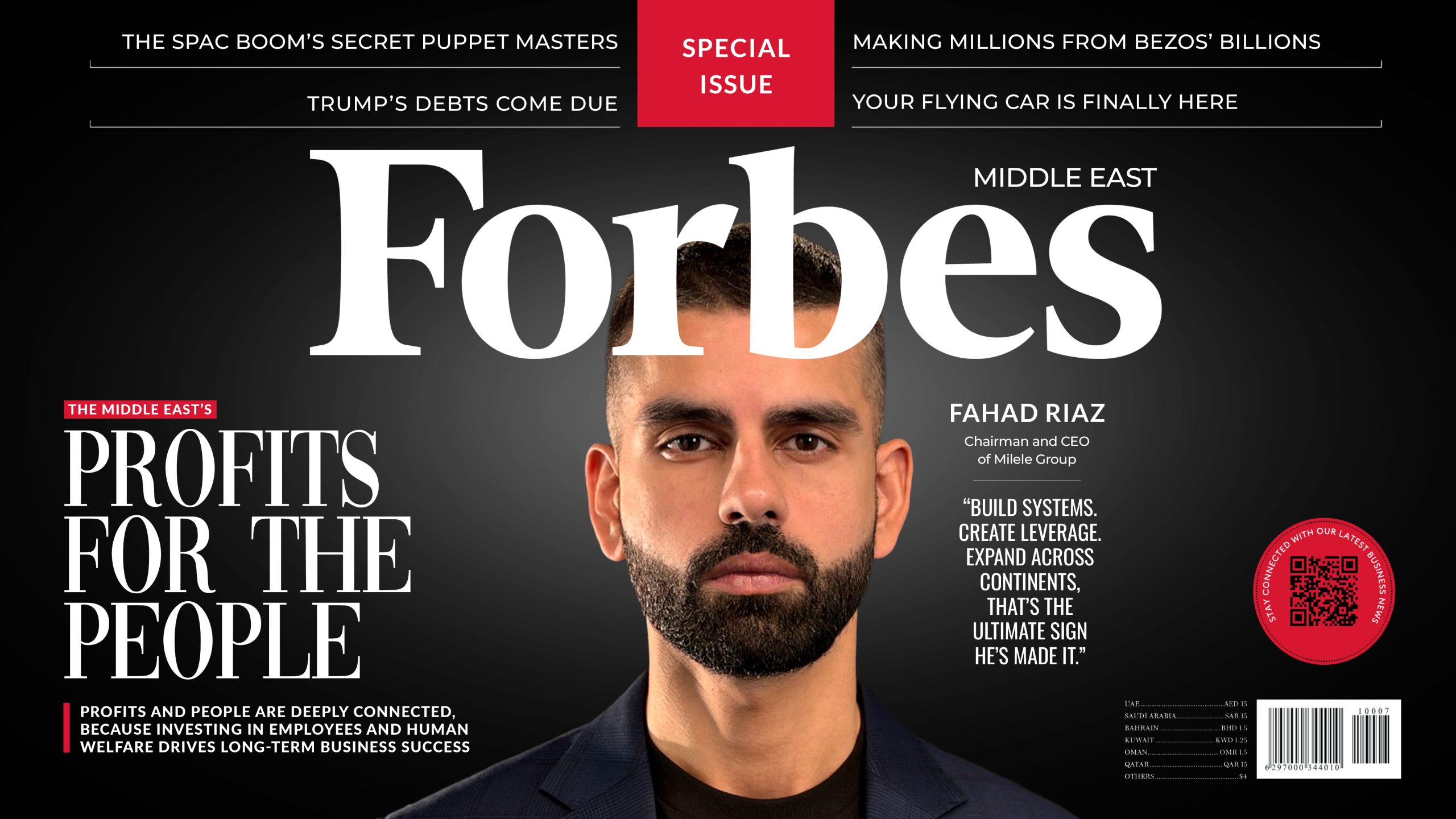
Fahad Riaz has also been featured on Forbes.com. That media presence sits alongside his own digital channels and makes his business activities easier to discover. For Milele Prime, visibility becomes useful when it helps people identify leadership and find clear information about the company they are considering.
The wider Milele Group adds another audience. Employees, partners and customers across its businesses can observe how the new trading arm develops. Riaz’s role as Group CEO means the performance of Milele Prime is read as a leadership decision for the institution, not merely a personal project.
This web of observation can become an advantage if it improves behaviour. A leader who knows that decisions will be connected across brands and platforms may place greater value on consistency. Public memory discourages the idea that each message exists alone.
It can also become difficult. Online audiences do not always have complete information, and visibility can magnify misunderstanding. Riaz must communicate clearly without treating every reaction as a strategic instruction. Accountability requires listening, but leadership still requires judgment.
The useful balance is openness without performance for its own sake. A founder should be reachable enough for people to see responsibility, while the company relies on proper systems rather than personality to solve every issue.
That balance protects both sides of the relationship. The audience receives a visible leader rather than a distant corporate voice. Employees receive processes that do not require every concern to become a public conversation. Riaz’s presence can set the tone and accept final responsibility, while the organisation must resolve ordinary matters through dependable channels. Visibility works best when it strengthens the institution instead of becoming a substitute for it.
Milele Prime will ultimately be judged through the platform, not through follower totals. Riaz’s audience cannot execute a client’s instruction or replace good operations. What it can do is remove anonymity from the top of the business.
That visible connection changes the trust proposition. Clients are not being asked to believe only in a logo. They can watch the founder, examine the group behind him and judge whether his continued conduct supports the promise of the brokerage.
Fahad Riaz has made himself visible beside Milele Prime. The lasting value of that decision will emerge through consistent communication and an organisation capable of resolving client needs. An audience may introduce a platform, but dependable conduct is what gives people a reason to keep examining it seriously.
Further information: FahadRiaz.com | Mileleprime.com