Dr. Jay Bhaumik, Chairman of Thesis Pharmacy, has long held that access to medication is a logistics problem but, more importantly, an issue of equity. The concern is one that the pharmaceutical industry’s commercial model was never designed to solve. Across the U.S., patients encounter barriers to medication access that have very little to do with whether treatment actually exists.
The much more real concern is whether treatment exists in a form that each person can obtain, afford, tolerate, and use. Compounding pharmacies are addressing many of those barriers simultaneously. Understanding their impact requires an honest look at the places where the commercial drug supply chain falls short for patients who depend on it.
When the Drug Exists but the Patient Cannot Access It
Drug shortages in the United States are a persistent and worsening structural problem. The FDA’s drug shortage database routinely lists hundreds of medications in active shortage at any given time, spanning everything from injectable anesthetics to chemotherapy agents to the GLP-1 receptor agonists that dominated pharmaceutical headlines in recent years.
For patients caught in a shortage, compounding pharmacies are one of the few legitimate pathways to continued treatment. A compounding pharmacy operating under appropriate regulatory oversight can prepare a formulation of a drug in shortage using active pharmaceutical ingredients sourced from FDA-registered suppliers. For patients managing chronic conditions, a gap in medication access can produce serious health consequences that compound over time. Compounding pharmacies that step into shortage gaps are performing a genuinely critical public health function.
“The shortage revealed something that practitioners in this space already knew, that the commercial supply chain is more fragile than most patients realize, and that compounding exists precisely to fill the gaps that fragility creates,” says Dr. Jay Bhaumik.
Affordability and the Compounding Alternative
Drug pricing in the United States creates access barriers that shortages do not, as brand-name medications protected by active patents or exclusivity agreements can carry price tags that place them out of reach for patients without comprehensive insurance coverage. Even patients with insurance regularly encounter formulary restrictions, step therapy requirements, and prior authorization hurdles that delay or deny access to the treatments their providers have prescribed.
In specific circumstances, compounding can provide a meaningfully more affordable pathway to equivalent therapeutic outcomes. When a brand-name medication’s active compound is available as a generic active pharmaceutical ingredient, the resulting compounded preparation may be substantially less expensive for the patient.
This dynamic is particularly relevant for patients requiring long-term hormone therapy, dermatological preparations, or specialized pain management formulations where commercial pricing has historically been high and therapeutic alternatives limited. Compounding pharmacies serving these patient populations are, in a real and practical sense, expanding access to care that would otherwise be financially out of reach.
Geographic Access and the Underserved Patient
Geographic access is an underacknowledged barrier with well-documented impact on patient outcomes. Rural communities are disproportionately underserved as independent pharmacies have closed at an accelerating rate over the past two decades, and chain pharmacy coverage doesn’t fill the gap uniformly.
Patients in these areas may travel significant distances for basic prescription services, a burden that becomes prohibitive when managing multiple chronic conditions. Compounding pharmacies, many operating mail-order dispensing models, grow their reach in ways conventional pharmacies structurally cannot.
A patient in a rural county without a local pharmacy can receive a customized formulation shipped directly to their home, prepared by a pharmacist available for consultation. Dr. Bhaumik considers this an underutilized access tool.
“Geography shouldn’t determine whether a patient can get the medication they need. The compounding pharmacy model, when it operates responsibly through mail-order channels, can reach patients that the traditional pharmacy footprint simply doesn’t serve,” he says.
Formulation Barriers and the Patients Left Behind
For many patients, the barrier is the medication itself, specifically the form in which it is commercially available. Patients with swallowing difficulties, neurological conditions, or documented allergies to inactive ingredients like dyes, preservatives, or gluten have no alternative within the standard supply chain.
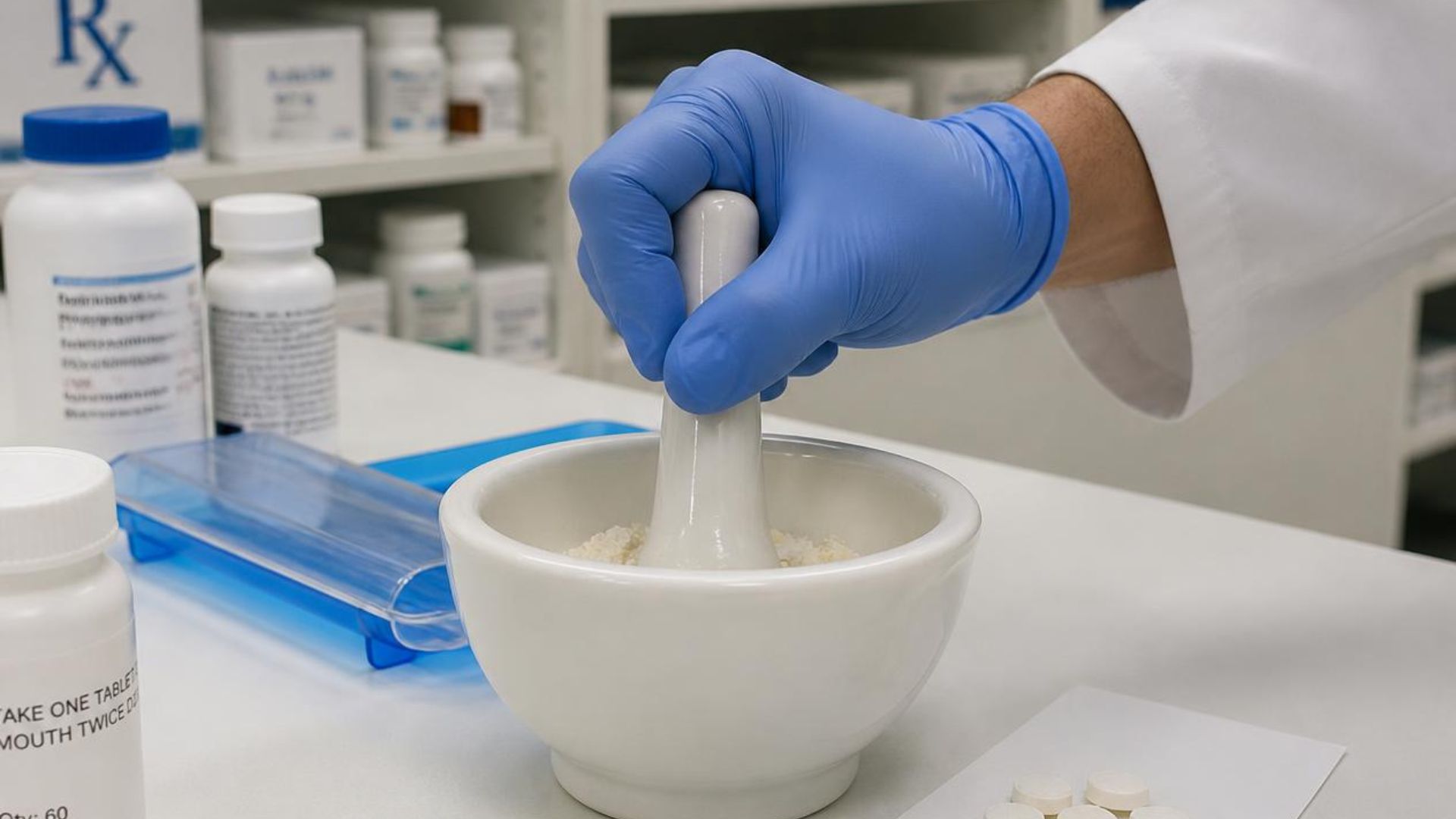
Compounding pharmacies solve formulation barriers by design. For instance, a tablet-only medication can be compounded as a liquid suspension, transdermal gel, sublingual preparation, or suppository, whichever route best suits the patient. Allergens can be removed, or a bitter pediatric medication can be flavored to support compliance. These are accommodations that often mean the difference between a patient who receives their medication and one who does not.
Compounding as a Bridge in Transitional Care
Patients moving between care settings often encounter medication access disruptions that compounding pharmacies are uniquely positioned to address. Institutional formularies do not always align with the medications a patient was receiving before admission or required upon discharge. Commercial products may be temporarily unavailable in the specific strength or format a transitional care plan calls for.
In these moments, a compounding pharmacy with the capacity to prepare a bridge formulation quickly and accurately can prevent the kind of medication gap that precipitates hospital readmission.
“Most people think about compounding in the context of specialty medications or hormone therapy. But some of the most important work compounding pharmacies do is keeping patients on their medications during the transitions that the rest of the healthcare system handles poorly,” says Dr. Bhaumik.
Access as a Measure of What Healthcare Actually Delivers
The ultimate measure of any healthcare system is the breadth of the population that receives its developed treatments. A medication that exists but cannot be accessed delivers no clinical benefit to the patient who needs it.
Compounding pharmacies cannot resolve every access challenge in American healthcare, and they are most definitely not a substitute for the systemic policy changes that durable access reform requires. What they do, within their defined scope and regulatory framework, is make medication access real for patients whom the commercial pharmaceutical model has structurally left behind. Their contribution is quiet, often invisible in the broader healthcare conversation, and genuinely indispensable.
Dr. Jay Bhaumik is a seasoned entrepreneur, investor, and real estate developer based in Plano, Texas, with over 20 years of experience in IT, cybersecurity, healthcare, the pharmaceutical sector, and strategic business growth. He serves as Chairman of Thesis Pharmacy, where he applies his expertise in innovation and investment to advancing personalized pharmaceutical care.
Disclaimer: This article is for informational purposes only and does not constitute medical, pharmaceutical, or professional advice. Always consult a licensed healthcare professional before making any medication or treatment decisions.